
The Economics of Automation: Why UK SMEs Are Investing in Collaborative Robots
In 2026, the SME manufacturing landscape is navigating a complex double bind. On one hand, the UK faces a significant shortage of skilled manual workers, particularly in welding, precision assembly, and logistics. On the other, the cost of human capital has risen sharply due to new employment regulations and the competitive nature of the modern job market. This has transformed collaborative robots from a tech curiosity into a fundamental financial and HR strategy.
By combining the almost immediate return on investment of automation with a long-term solution for workforce stability, UK manufacturers are finding that the most profitable way to grow is by putting a robot and human together on the same team.
ROI in the Age of Full Expensing
The primary driver for cobot adoption is a compelling fiscal environment. Following the 2023 Spring Statement, the UK government solidified full expensing as a permanent fixture of the tax code. This allows SMEs to deduct 100% of the cost of plant and machinery investments (such as a new cobot system) from their taxable profits in the first year of purchase. When you factor in this immediate tax relief alongside the code of hardware, the payback period for a standard cobot system is often measured within mere months. This rapid ROI is a stark contrast to traditional robot automation, which frequently requires multi-year commitments and significant upfront capital that drains SME cash flow.
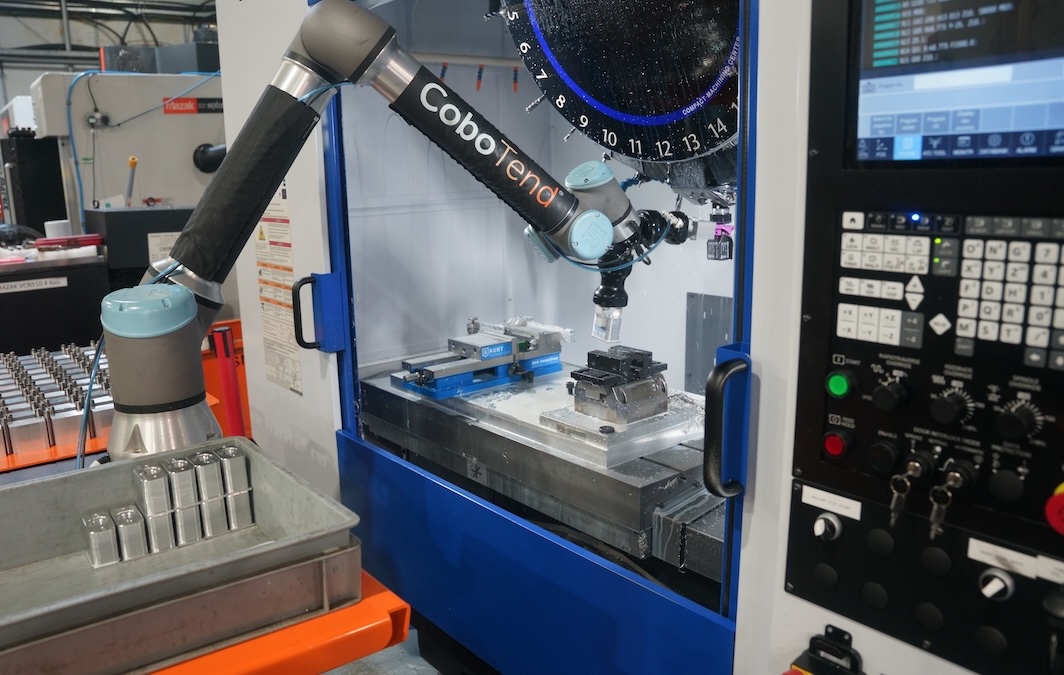
Beyond tax incentives, the operational savings are becoming impossible to ignore. A single cobot can operate across multiple shifts, effectively doubling or tripling the output of a specific workstation without increasing the headcount and associated costs of National Insurance, pensions, and benefits. While many focus on their CapEx budget, if you compare a cobot’s monthly cost to your current OpEx spend, the business case usually stacks up pretty quickly.
Bridging the Skills Gap
While the financial metrics are impressive, the human ROI is where the long-term value lies. The UK manufacturing sector is currently grappling with a retirement cliff, as veteran welders and machinists leave the workforce without enough apprentices to fill their shoes.
Cobots act as a workforce multiplier, allowing a single skilled technician to oversee three or four automated cells simultaneously. It’s important to note though, this shift doesn't replace workers; it elevates them. Instead of performing the back-breaking task of locating 5kg parts into a CNC machine every 60 seconds, the employee becomes a cobot supervisor, responsible for quality control, programming, and process optimisation.
This evolution in job roles is a powerful tool for staff retention and recruitment. In the 2026 job market, workers are increasingly seeking roles that offer technical development and physical longevity. By removing the 3D tasks - dull, dirty, and dangerous - from the daily routine, SMEs are seeing a marked decrease in workplace injuries and repetitive strain claims. This is not only reducing insurance premiums but also creating a more attractive workplace culture.
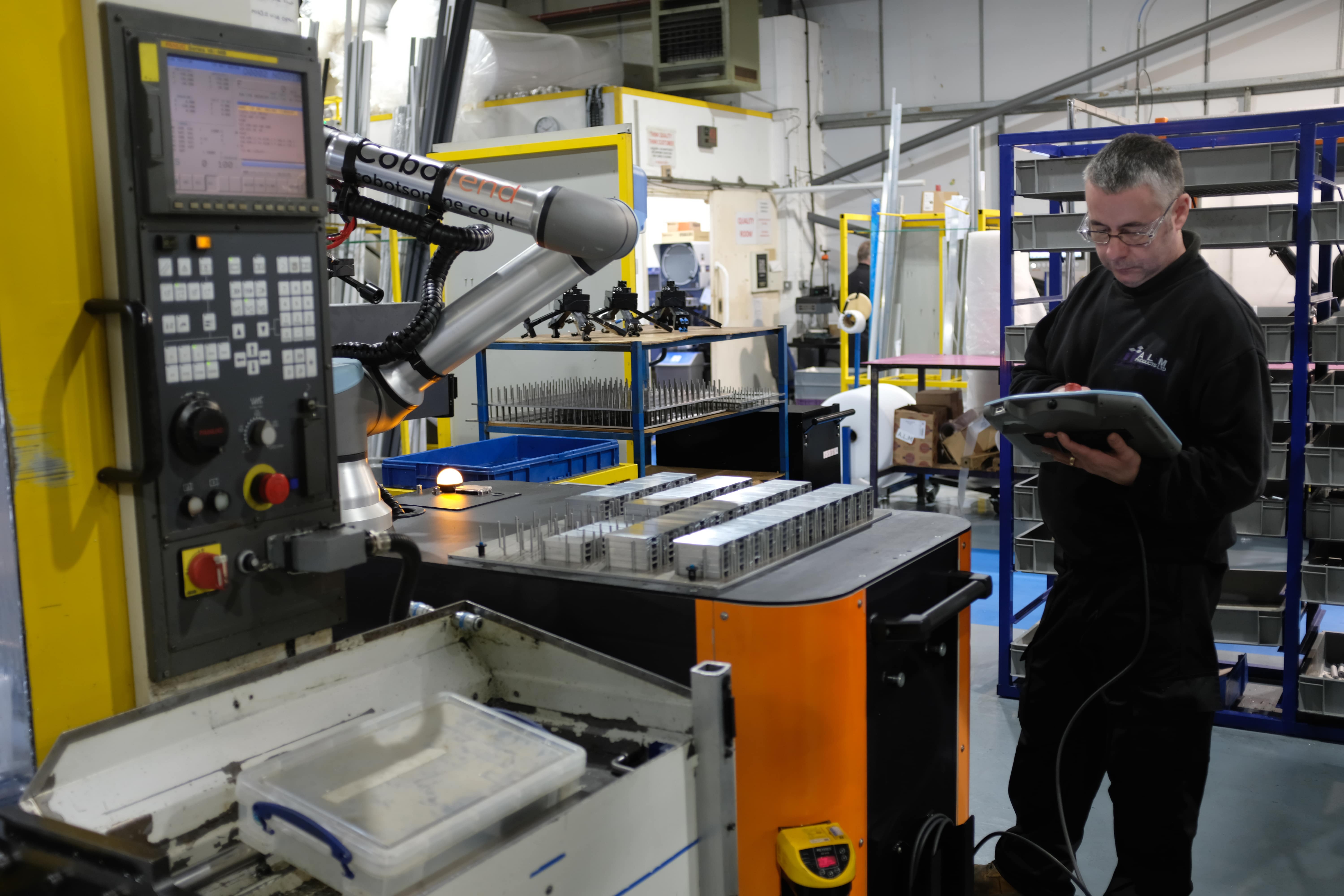
When a business invests in cobots, it sends a clear signal to its employees: we are investing in the technology that makes your job easier and your skills more relevant in a digital economy.
Mitigating Risk and Enhancing Resilience
The combination of financial and human benefits creates a resilience shield for manufacturers. The recent updates to UK employment law which came into effect in April 2026, including strengthened day-one rights and stricter health and safety regulations, have increased the administrative burden of managing large manual workforces. Cobots provide a level of operational consistency that is immune to these external pressures.
Collaborative robots don’t take sick days, they don’t suffer from fatigue-related errors at 4pm on a Friday, and they produce a digital trace of every action, which simplifies compliance and quality auditing for ISO standards.
Ultimately, the decision to integrate cobots is a strategic move to future-proof your business against both economic volatility and labour shortages. By leveraging government tax breaks to subsidise the hardware, and using that hardware to upskill the existing workforce, SMEs are able to create a leaner, faster, and more adaptable manufacturing base. At Cobots Online, we see this daily. The manufacturers that thrive are those that view automation not as a replacement for people, but as a primary way to value them. The future of British manufacturing isn’t just about the machines we build; it’s about how those machines empower the people who run them.
Take the Next Step Toward Smarter Production
Ready to see how collaborative automation can transform your bottom line? Don’t leave your growth to change. Contact Cobots Online today to book a live demo and see our technology in action.
Our expert team will help you evaluate your current processes to identify the highest-impact automation opportunities and provide a detailed ROI breakdown for your production line. Let’s build a more resilient, profitable future for your business together.