
ISO 9001 & 14001 (2026 Revisions): What Manufacturers Need to Know & How Automation Helps
If you run a manufacturing business, you have most likely heard that ISO standards have changed and wondered whether your quality or environmental management systems need a complete overhaul.
The ISO landscape has moved quickly in recent years, with the 2024 climate amendments only the first step of changes introduced. ISO 14001:2026 was published in April 2026, and ISO 9001:2026 followed in September of the same year, both now replacing their respective 2015 editions.
The good news? Neither revision is a complete rewrite. Both build on the existing high-level structure and carry climate considerations forward. However, there are new expectations regarding leadership, risk handling, and process control - and the clock is officially running on your 3-year transition window to 2029.
In this guide, we break down what’s changed, what it means in practice, and where automation can support your quality and environmental objectives.
Why the Standards Changed Again
Manufacturers operate in an increasingly complex environment. Energy prices rising, supply chain disruptions, customer sustainability requirements and environmental legislation heavily influence daily operations.
ISO’s 2024 climate change amendments ensured that organisations explicitly considered climate impact within their business context. Rather than waiting for full standard revisions, ISO introduced targeted updates to make climate considerations part of the standard management framework.
The published 2026 editions of both ISO 9001 and ISO 14001 reflect priorities - such as organisational resilience, supply chain control, sustainability, and structured change management - that have grown significantly over the past decade. Both standards are evolutionary rather than revolutionary. You don't need a scrap-and-rebuild approach to your management system, but you do need documented evidence of process consistency, change management, and resource efficiency.
What Changed in ISO 9001:2026
ISO 9001:2026 emphasises quality culture and ethical behaviour, separates risks from opportunities, and strengthens change planning and organisational knowledge. The main shifts are:
- Quality Culture and Ethical Behaviour (Clauses 5.1 and 7.3): Top management is expected to actively promote quality culture and integrity, and awareness requirements for staff extend to these topics.
- Risks and Opportunities Handled Separately (Clause 6.1): This is split into subclauses so that actions on risk and actions on opportunities are considered distinctly.
- Strategic Alignment (Clause 5.2): Quality policy, objectives and actions are expected to be more clearly tied to the organisation’s context and long-term direction.
- Change Planning and Organisational Knowledge (Clause 6.3 and 7.1.6): Clearer expectations around planning, communicating, and evaluating structural or operational changes before rollout.
- Continual Improvement (Clause 10.1): Restructured into a consolidated clause.
- Climate Considerations (Clause 4.1 and 4.2): Permanent integration of climate-related external issues and stakeholder requirements into the QMS context.
Note: Commentators and certification bodies differ on how strategic alignment will be assessed. Consult your audit body early to understand their specific expectations.
What Changed in ISO 14001:2026
ISO 14001:2026 places heavier weight on climate issues, life-cycle thinking, formal change management, and verifiable environmental performance outcomes. Key operational shifts include:
- Broader Environmental Context (Clause 4.1): Explicitly includes climate change, biodiversity loss, natural resource availability, and pollution levels within context assessments.
- Life-Cycle Thinking (Clauses 4 & 8): Looking beyond your own site to upstream and downstream impacts, rather than focusing solely on site boundaries.
- Dedicated Change Management (Clause 6.3): Requires a structured process to evaluate and control environmental risks whenever process or product changes occur.
- Performance Evaluation (Clause 9): Defining clearer expectations around results, not just procedural compliance.
What Should Manufacturers Do in Practice?
A sensible transition is a planned project, not a panic, and we believe a five-step approach works well.
- Talk to Your Certification Body: Ask when they stop auditing the 2015 editions, at which audit your transition will be assessed, and what extra audit time they charge.
- Run a Focused Gap Analysis: Compare your current system against the 2026 requirements clause by clause. For ISO 9001, look at leadership and culture, risk and opportunity planning, change control and knowledge management. For ISO 14001, look at life cycle considerations, change management and performance evaluation.
- Refresh Your Context Analysis: Document whether climate change is relevant to your context (with rationale either way) and ensure your interested parties register captures relevant stakeholder requirements.
- Update Documents and Operational Training: Revise policies, procedures and awareness materials, and brief your top management on their new responsibilities.
- Audit and Review Internally: Conduct internal audits against the 2026 clauses and present the findings in a formal Management Review prior to your transition audit.
If you hold both certificates, coordinate the two transitions. Use ISO 14001 momentum to streamline changes across ISO 9001.
How Collaborative Automation Supports Your ISO Objectives
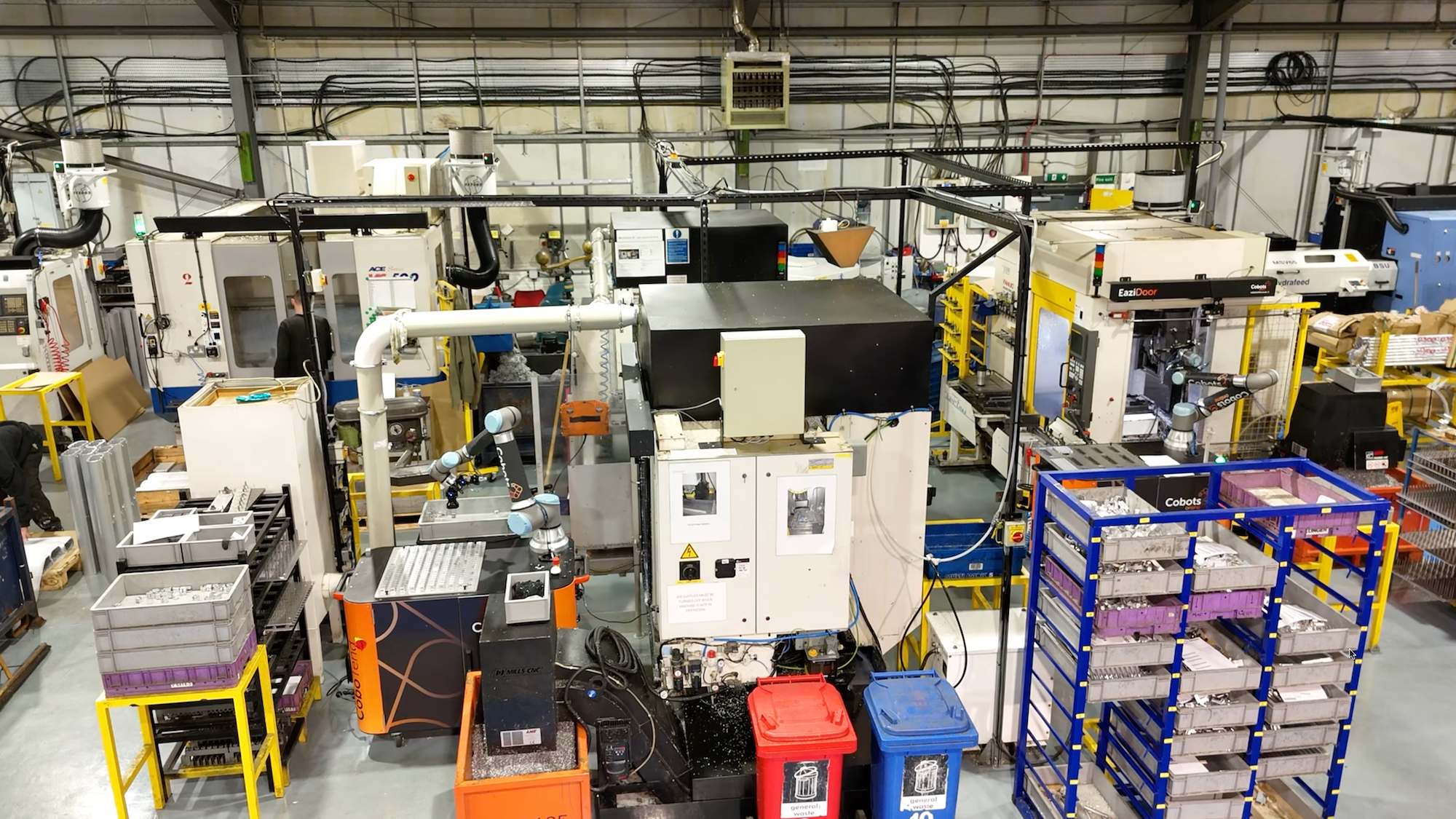
Installing a cobot will not automatically grant you an ISO certificate. Collaborative robots are enabling technologies that support the operational objectives a manufacturer establishes through its management system.
However, when properly integrated, cobot automation directly targets the key focus areas highlighted in the 2026 standards:
| ISO 2026 Focus Area | Practical Floor Challenge | How Cobot Automation Supports Objectives |
|---|---|---|
| ISO 9001: Process Repeatability & Quality |
Human fatigue and repetitive strain lead to cycle time drift and quality variations. |
Automated machine tending solutions maintain exact, repeatable cycle times 24/7, reducing non-conformances and variations (Clause 8). |
|
ISO 14001: Scrap & Waste Reduction |
Manual application errors or improper handling cause rework, excess scrap, and material waste. |
Precision dosing, handling, and automated palletising minimise material waste, supporting resource efficiency and life-cycle goals. |
|
ISO 9001: Capturing Process Knowledge |
Skilled operator turnover risks losing critical knowledge and operational expertise. |
Programming a cobot digitises process parameters into repeatable digital recipes, safeguarding organizational knowledge (Clause 7.1.6). |
|
ISO 9001 & 14001: Data & Performance Control |
Lack of real-time visibility into machine downtime, cycle failures, and energy usage. |
Integrated cobots provide production log data that directly supports management reviews and evidence-based decision-making (Clause 9). |
Rather than asking "Will a cobot make us ISO compliant?", forward-thinking manufacturers should be asking: "Which process variations or resource inefficiencies are holding us back from hitting our ISO objectives?"
Make Your ISO Review Work for Your Business
The 2026 revisions to ISO 9001 and ISO 14001 raise the bar on leadership, change planning, risk management, and sustainability performance. Starting your gap analysis today while the transition window is open gives you ample time to build a robust system long before 2029.
For manufacturers, this transition is more than a compliance exercise, it's an opportunity to optimise performance across your entire production floor. At Cobots Online, we believe that understanding your manufacturing process is the vital starting point for identifying where automation makes a practical difference.
If you are exploring ways to reduce scrap, improve throughput, and support your operational targets, the team at Cobots Online is here to help.
Explore our machine tending and automation solutions to discover where a more consistent, efficient process could make a difference.