
Stop Letting CNC Machines Sit Idle: A Comprehensive Guide to Cobot Machine Tending
In the competitive world of manufacturing, the spindle run time is the only metric that truly pays the bills. Yet, in many UK machine shops, expensive CNC machines sit idle during lunch breaks, between shifts, and through the night. The bottleneck however hasn’t been the machines themselves, it’s been the struggle to keep them fed.
The CNC machine is the workhorse of modern manufacturing, but let’s be honest, having a skilled machinist spend hours of their day manually opening doors and swapping parts is a waste of time, energy, and money. Thanks to collaborative robots, manual machine tending is becoming a relic of the past, emerging as the bridge between traditional machining excellence and the future of automated efficiency.
Why Manual Machine Tending is Faltering
For decades, machine tending has meant a human operator standing in front of a machine, waiting for a cycle to end, opening a heavy door, swapping a finished part for a raw blank, and hitting the start. Repeat, 500 times a day
This manual approach is facing three major crises. The first, severe labour shortages. Skilled machinists are harder to find than ever. When you do finally hire one, the last thing you want them doing is opening and closing doors; you want them programming, optimising feeds and speeds, and performing quality checks.
The second challenge, machine tending is repetitive, dull, and physically taxing work that many simply don’t want to do. This labour shortage is leaving spindles sitting idle, directly impacting the bottom line of SMEs across the UK.
Beyond recruitment struggles, machine shops face underutilised assets. A human can work 8 hours a day, with breaks, whereas a CNC machine is capable of working 24/7. Without automation, you are leaving 16 hours of potential revenue on the table every single day.
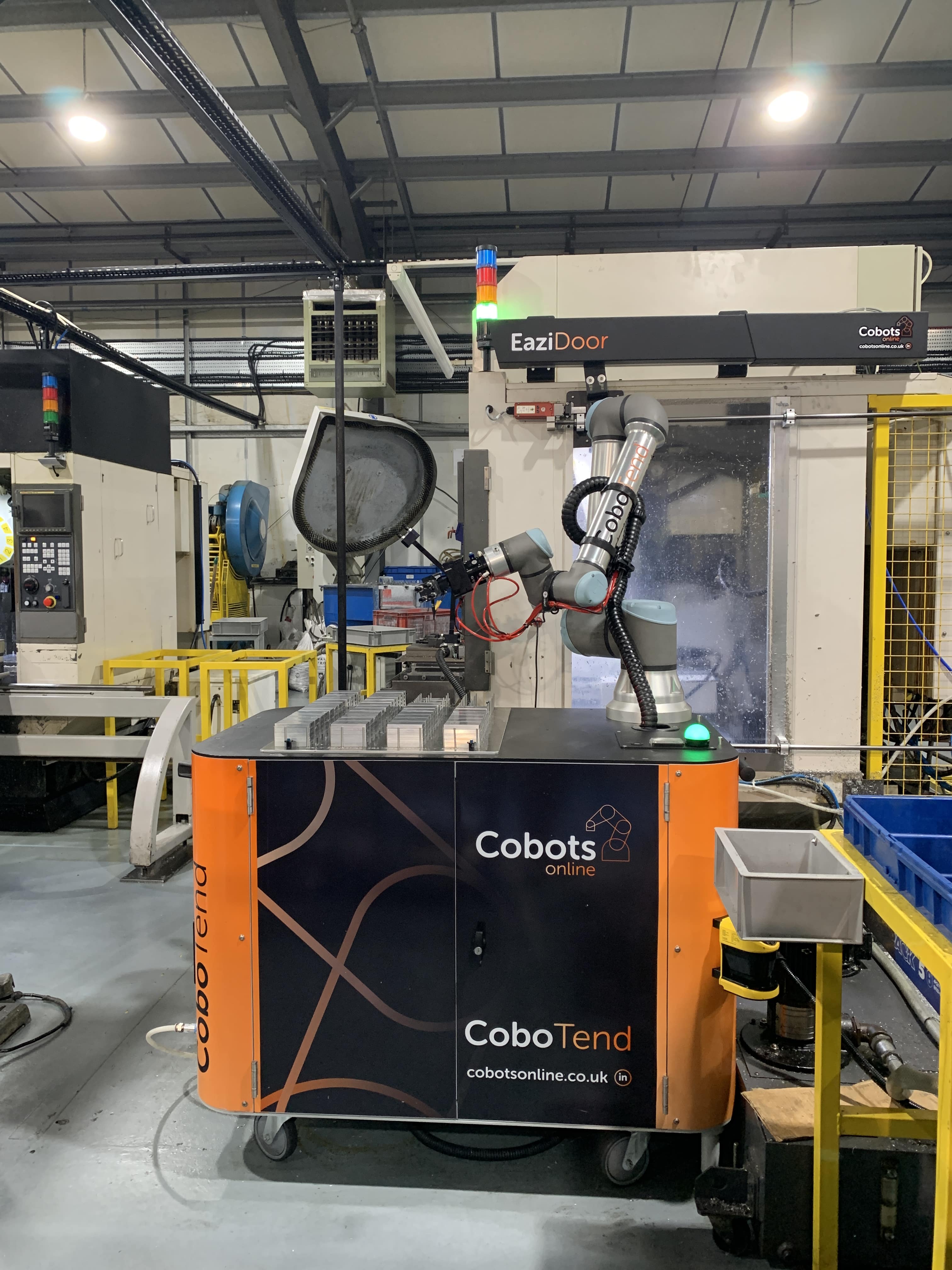
How Cobots and CNC Machines Work Together
Unlike traditional industrial robots that require extensive safety cages and complex coding, cobots are designed to work alongside humans. In a machine tending setup, the cobot acts as a tireless assistant, with a typical workflow consisting of:
- The Pick: The cobot picks the raw part from a tray or drawer.
- The Interaction: The cobot communicates with the CNC machine, via a digital input/output or simple interface, to ensure the cycle is finished.
- The Swap: It opens the door (if not also automated), removes the finished part and loads the new blank.
- The Restart: It signals the machine to start the next cycle and places the finished part in an output tray or on a conveyor.
With unwavering precision and never fatiguing, a collaborative robot can repeat the machine tending sequence for as long as you need it to. It allows for the introduction of light out production, increasing productivity and output from day one.
Benefits of Automated CNC Machine Tending
We hear time and time again, why choose a cobot over a traditional robot or a human? It comes down to maximising the spindle.
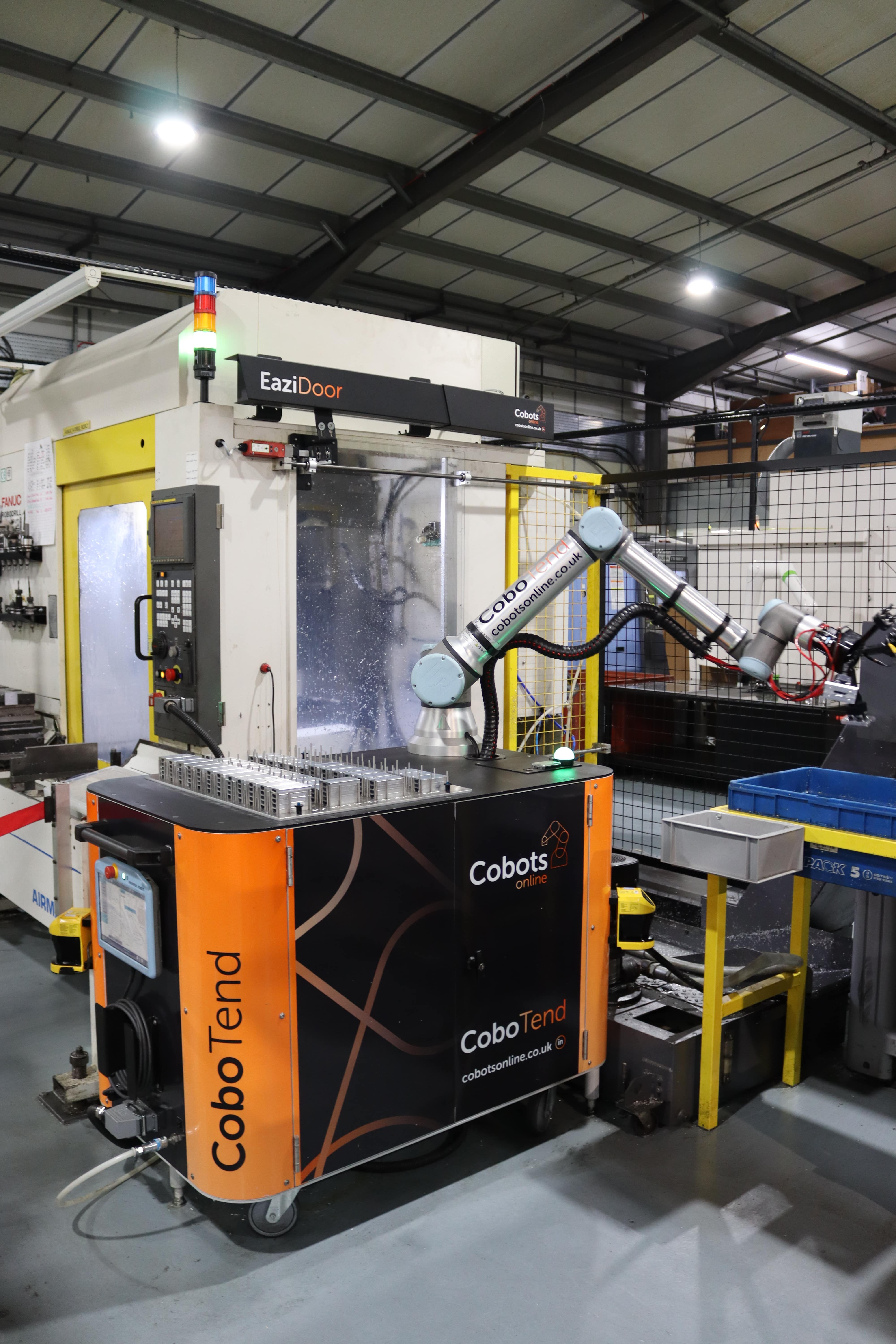
While manual shifts are limited by breaks and clock-out times, a cobot ensures continuous operation. Our mobile solution, CoboTend, redefines shop floor agility with the ability to be wheeled between machines in minutes, moving where the bottlenecks arise. If your mill is busy today but your lathe is backed up tomorrow, the cobot moves with the work.
By eliminating human variance and ensuring parts are seated with identical force and orientation every time, you don't just increase output, you virtually eliminate scrap.
One important element to stress is automation is a tool for retention, not just production. By offloading the repetitive tasks to a cobot, your skilled machinists are freed to focus on high-value programming and quality control - roles that are more engaging and far more profitable for your business.
Getting Started with Automation
Integrating automation for the first time can feel daunting, but breaking it down into smaller steps ensures a successful deployment.
Step 1: Evaluable the Task and Part Geometry
Start by assessing your production. High-volume, low-complexity parts of low-hanging fruit. Consider the part’s weight and the distance the cobot needs to reach. If you have a high-mix, low-volume shop, look for families of parts that can use the same setup to utilise resources.
Step 2: Select the Right Cobot
At Cobots Online, we design automation systems based around existing technology from the likes of Universal Robots, and also create completely bespoke solutions based on your manufacturing needs. We ensure all cobots offer a balance of precision and ease of use for their intended purpose, defining the payload, reach, and precision needs of the tasks at hand.
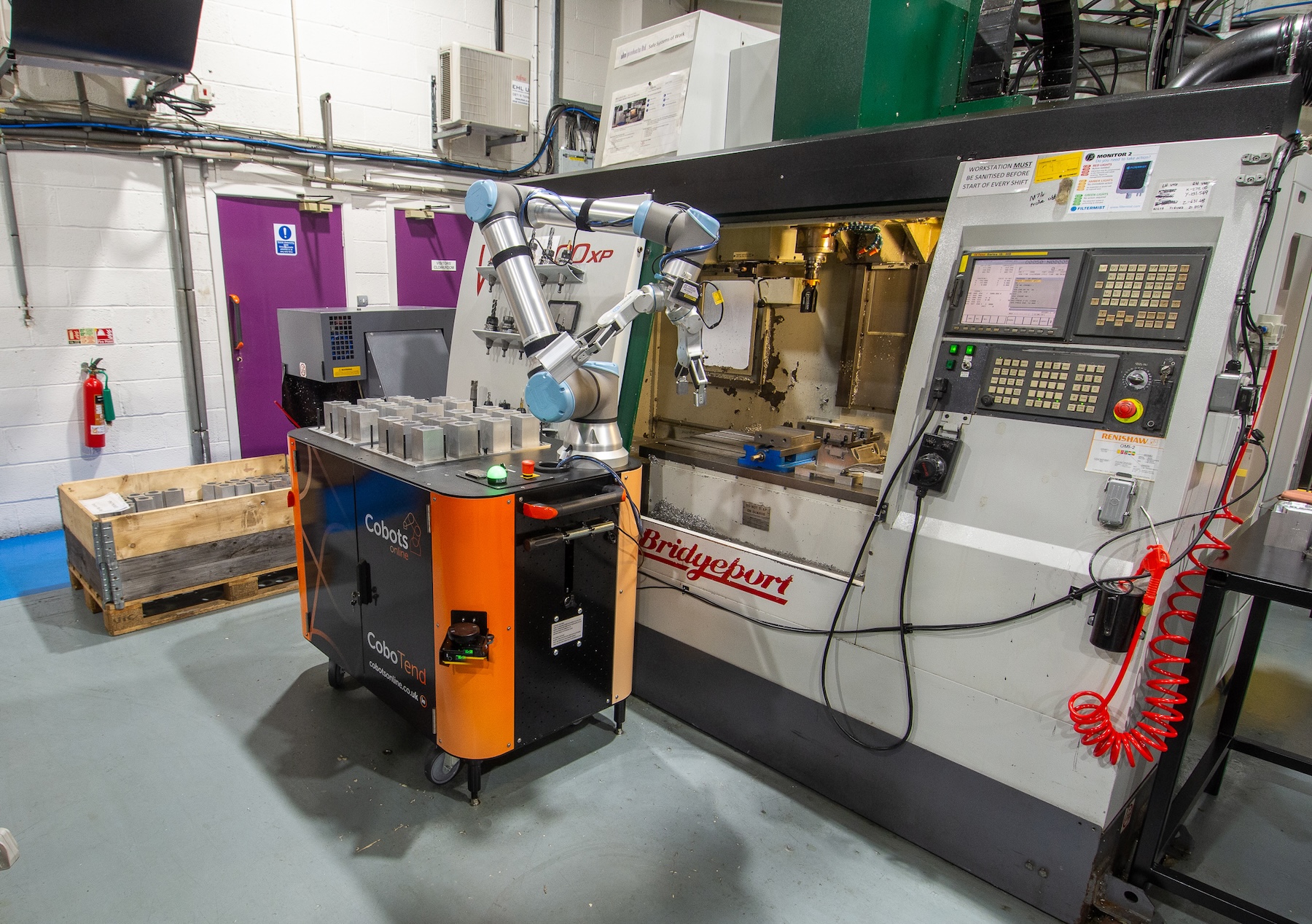
Step 3: Choosing the Mounting Configuration:
The mounting configuration can impact the productivity of the cell, so it’s important to decide if you need a:
- Fixed Pedestal: Best for permanent, high-volume cells.
- Mobile Cart: Ideal for high-mix low-volume shops where the cobot needs to move between different CNC machines.
- Direct Machine Mount: Saves floor space but requires a rigid machine frame.
Step 4: Select the End of Arm Tooling (EOAT)
The “hand” of the cobot is critical. The chosen EOAT must match the part size and material in order to provide the best efficiency and performance.
Step 5: Automate the CNC Doors
For greater efficiency, automated CNC doors like CoboDoor can be programmed to open and close upon receiving a signal from the cobot.
Step 6: Establish Communication
Should your robot act like a human operator by pushing buttons and opening doors, or should it communicate directly with the machine's control system? Choosing between physical interaction and digital integration is a key step in your automation strategy.
Step 7: Define the Part Feeding Solution
The cobot needs to know where the raw parts are, with tables and conveyors being some of the most popular choices. However, the best and most cost effective solution will depend on your current operation.
Step 8: Safety Assessment and Training
Cobots have built-in sensors to slow down or stop if a person is too close to the workspace. However, you must still perform a thorough risk assessment to mitigate health and safety issues. And finally, perhaps most importantly, train your team. When your operators realise the cobot is there to make their lives easier, they become your best automation advocates.
Start Your CNC Automation Journey
The question is no longer if you should automate, but how fast you can get started. Every hour your CNC machine sits idle is an hour of lost profit.
The gap between a manual shop and an automated one is smaller than you think. You don't need a team of robotics engineers or a milti-million pound budget to reclaim your lost production hours. You just need the right partner to help you take that first step.
At Cobots Online, we don’t just sell hardware; we provide a blueprint for your success. Whether you are looking to solve a chronic labor shortage, reduce your scrap rate, or finally hit those "impossible" production deadlines, we are here to help.
Don’t let your spindles sit idle for another shift. Reach out to the Cobots Online team today for a no-pressure consultation. Let’s build a more productive, more profitable future for your machine shop together.